Any condition, any size
Sell a Dual Voltage Transformer in Ohio
Padmount and dry-type units at this voltage bought across Ohio, in service or already on the floor.
What we buy
What we buy here
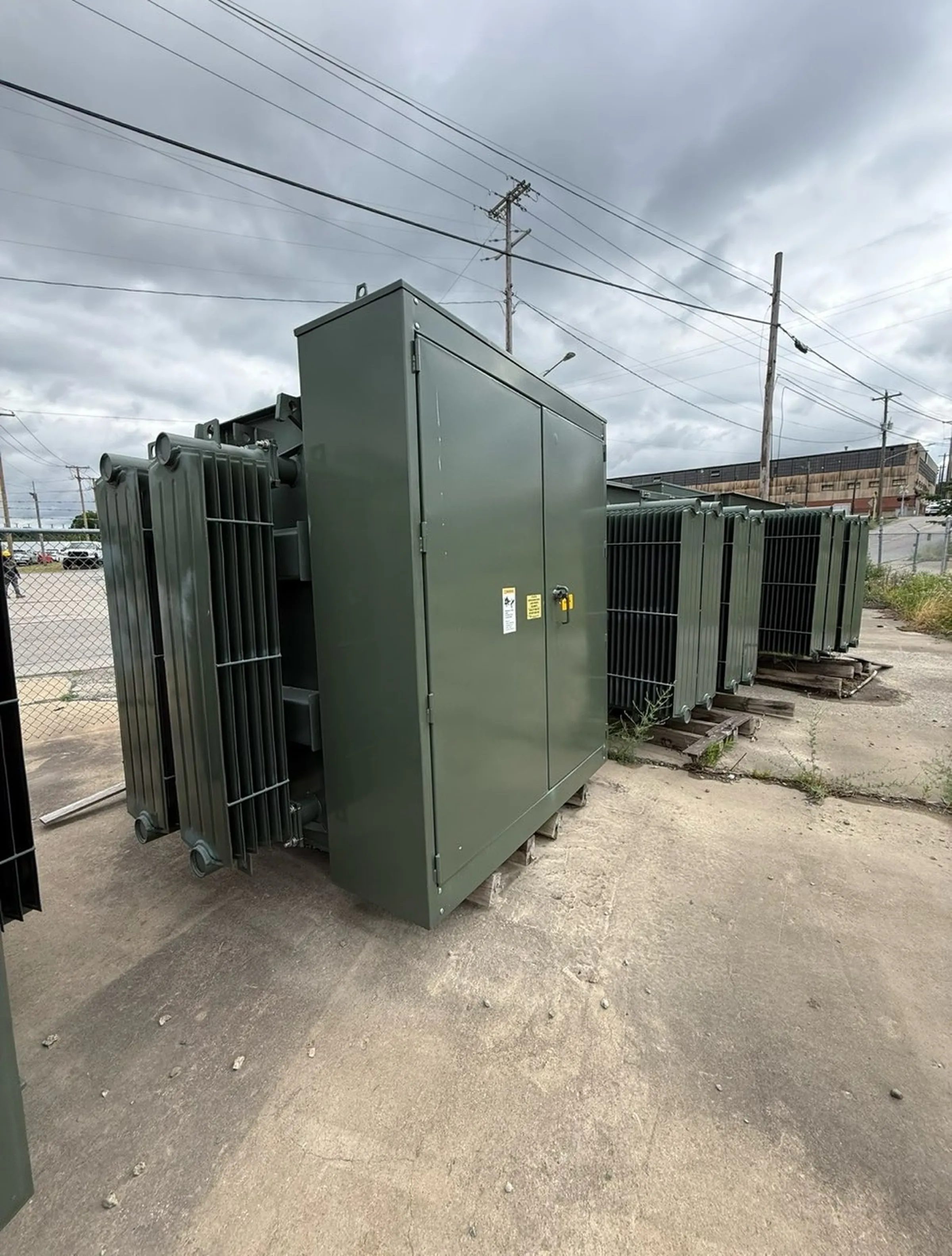
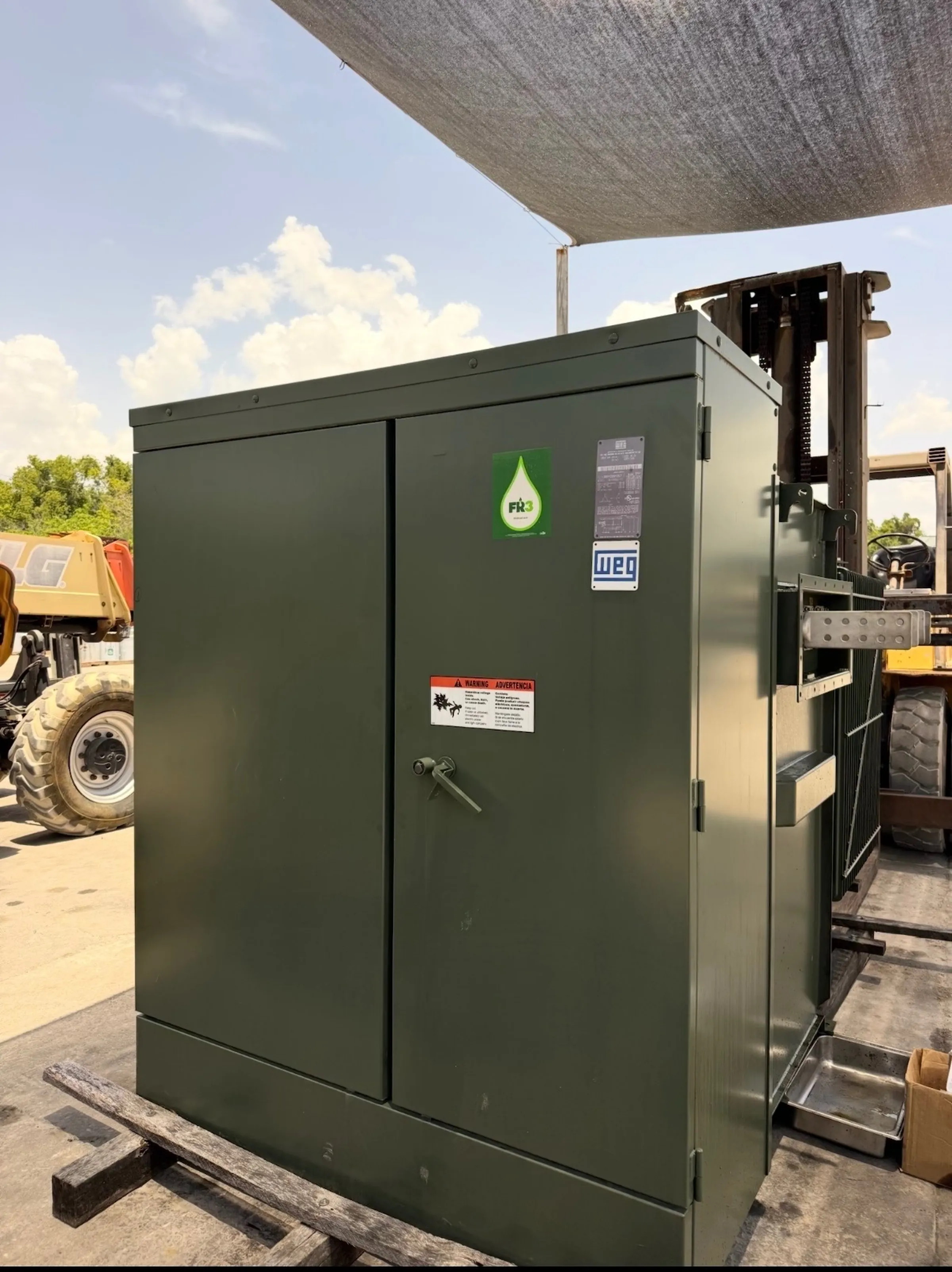
On an Ohio system, Dual Voltage primary usually pairs with a 480 or 208-volt secondary, and the tag shows both. Dual Voltage units are usually fed from overhead primary, which is why so many of them are pole-mounted or pad-mounted.
| Meaning | A dual-voltage transformer carries two primary ratings, usually 12,470 and 24,940 volts, so one unit can serve two different systems. |
|---|---|
| Systems | utility distribution and plant services that may be re-fed |
| Equipment | padmounts and distribution transformers |
| Buying note | Dual-voltage units are more flexible and therefore easier to place, which is why they hold value better than single-voltage units. |
Who we buy from
Six kinds of seller, one desk
- Recyclers
- Electrical contractors
- Equipment dealers
- End users
- Demo contractors
- Distributors
Fast offers
A nameplate photo is usually enough to price a unit the same day.
Dedicated logistics
We arrange the crane, the permits and the flatbed, not you.
No broker fees
You are dealing with the buyer, so nothing is shaved off the offer.
How it works
Six steps from your yard to the money
- 01
Take pictures
The nameplate, the cabinet interior and the tank in daylight. Three photographs are usually enough to place a unit in the right class and the right price band.
- 02
Send them to us
The form on this page, a text or an email all reach the same desk. Include the city, the access and any deadline the site is working to.
- 03
Review the offer
A buyer reads the photographs, asks one or two questions and sends a written offer with the assumptions stated, so nothing changes on the day.
- 04
We schedule freight
Crane, flatbed and permits are booked around your access. You get a date and a window, and we carry the cost of getting it right.
- 05
Testing on arrival
Winding resistance, megger and turns ratio, plus oil analysis where the unit is liquid filled. The results decide the final number, and you see them.
- 06
Get paid
Payment is released on the agreed terms once the unit is received and tested, by check or ACH. No retention, no sixty-day terms.
What we handle for you
The parts sellers dread, done for you
Rigging
Crane and forklift arranged around your access, not the other way round.
Oil containment
Bunds, absorbent and disposal handled before the unit moves.
Bill of sale
A clean title document for your records, signed on collection.
PCB paperwork
Pre-1979 units get the testing and the manifest they need.
Voltage class
What Dual Voltage means on a nameplate
The Dual Voltage class covers a great deal of Ohio equipment, from pole cans to large padmounts. A phase shifter without its control system is a very expensive fixed reactor.
A storm leaves a range that runs from cosmetic damage to a burnt core, and testing is what separates them. Soft ground after a wet week has stopped more lifts than any mechanical problem.
What we see at this voltage
An impedance figure that does not match the existing protection is a problem nobody notices until a fault. Impedance is the figure that decides whether the existing protection still works, and it is printed on the tag.
A photograph taken in daylight beats one taken with a flash, because glare destroys the stamped characters. The photograph of the nameplate is worth more than a page of description, and it takes about four seconds to take.
Handling and safety
Hot work, confined space and crane lift plans are all part of the job, and a plant safety officer usually wants to see them first. Most sellers underestimate the lift and overestimate the drive, which is the opposite of how the cost actually falls.
A trailer needs somewhere to stand, and the place it stands is rarely the place the site had in mind. A pad that does not drain will rust a tank base long before the winding fails, which is a cheap thing to check.
What it is worth
A common rating in poor condition sells faster than a rare one in good condition. A range on the phone and a firm number after the photographs is the honest sequence, and sellers recognise it.
A K-rated unit holds its value in any building full of electronics, which is most buildings now. A buyer who explains a low number honestly is more useful than one who agrees with everything.
Common questions
Other voltage classes
Get started
Get an offer in minutes
Five fields and a phone number is all we need to start. We reply the same business day, and a firm number follows the nameplate photo.
(614) 715-3047or send the form and we will call you.
Questions
What sellers ask before they call
Equipment types
Do you buy Dual Voltage transformers in Ohio?
There is no pressure to accept on the call; the number holds for a set period and you can test it against another buyer. If a unit sits just over a state line, the honest answer is that somebody closer should buy it. A hot mechanical room quietly derates everything in it, and nobody notices until a unit fails early.
Service area
What is the difference between Dual Voltage and the next class up?
Payment goes out by bank wire, ACH or certified check on pickup, with no holdback waiting on somebody else's sale. Units at Dual Voltage are normally protected by bayonet fuses or a breaker, and the protection travels with the design. A purchase is a handover of risk as much as a handover of metal.
Payment
Can a Dual Voltage unit be moved without a permit?
Nobody asks you to front the crane, the permits or the haul, and nobody nets those out of the offer afterwards. The permit names the route, the axle load and the dates, and the driver follows it, because that is not a detail to improvise. Paint is a cosmetic question, and seam rust is a structural one, and the two are often confused.