Any condition, any size
Sell a 69 kV Transformer in Ohio
Padmount and dry-type units at this voltage bought across Ohio, in service or already on the floor.
What we buy
What we buy here
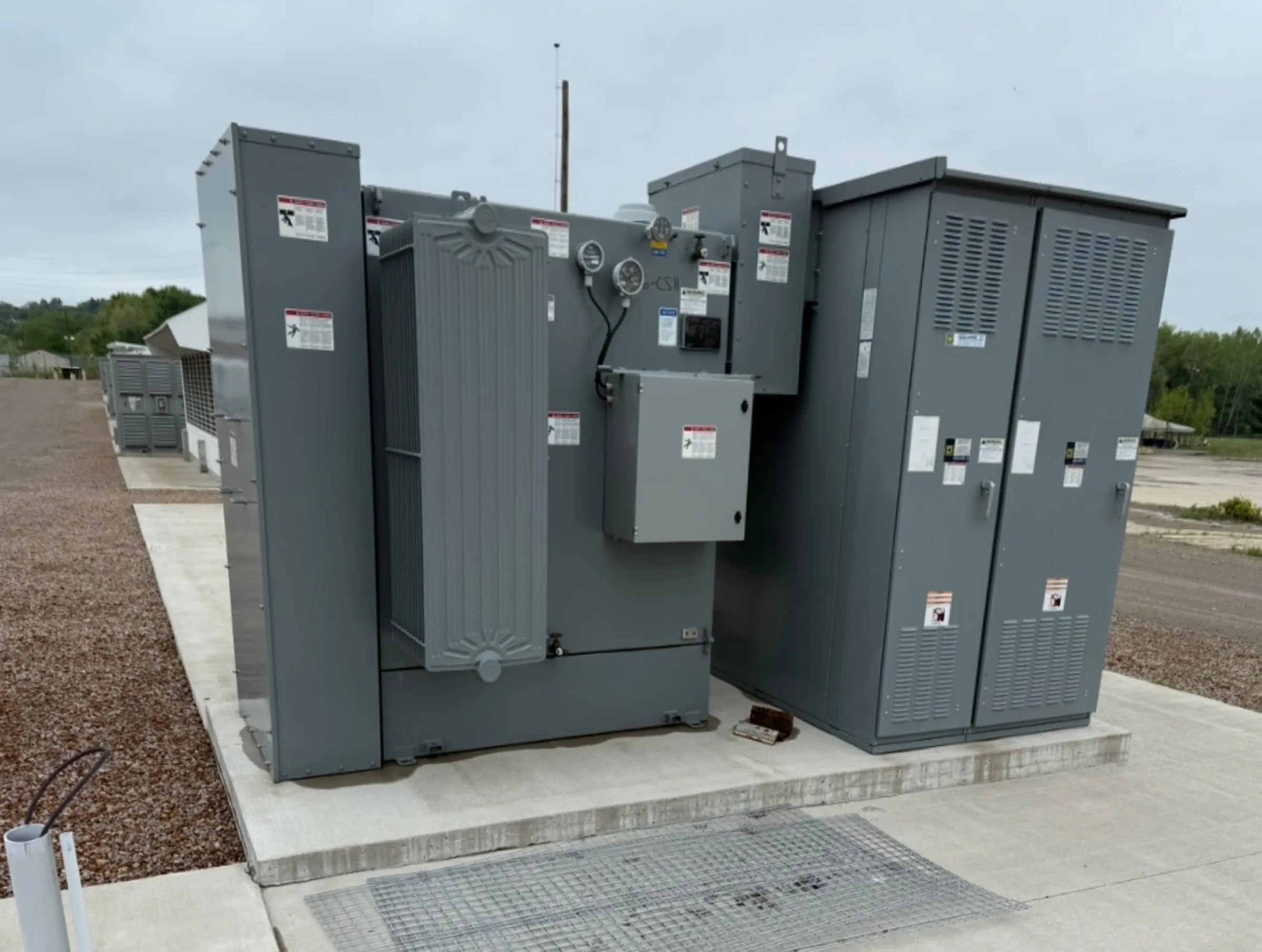
The 69 kV system in Ohio is often grounded wye, which decides whether the unit has a neutral brought out. A 69 kV primary tells you the unit was built for a utility distribution system rather than for a plant bus.
| Meaning | 69,000 volts is a standard sub-transmission voltage across the Midwest, and it is the entry point to what most engineers call substation class. |
|---|---|
| Systems | sub-transmission and utility substations |
| Equipment | substation transformers, breakers and instrument transformers |
| Buying note | A 69 kV transformer needs a permit and a crane plan, and the bushings usually travel separately. |

Who we buy from
Six kinds of seller, one desk
- Recyclers
- Electrical contractors
- Equipment dealers
- End users
- Demo contractors
- Distributors
Fast offers
A nameplate photo is usually enough to price a unit the same day.
Dedicated logistics
We arrange the crane, the permits and the flatbed, not you.
No broker fees
You are dealing with the buyer, so nothing is shaved off the offer.
How it works
Six steps from your yard to the money
- 01
Take pictures
The nameplate, the cabinet interior and the tank in daylight. Three photographs are usually enough to place a unit in the right class and the right price band.
- 02
Send them to us
The form on this page, a text or an email all reach the same desk. Include the city, the access and any deadline the site is working to.
- 03
Review the offer
A buyer reads the photographs, asks one or two questions and sends a written offer with the assumptions stated, so nothing changes on the day.
- 04
We schedule freight
Crane, flatbed and permits are booked around your access. You get a date and a window, and we carry the cost of getting it right.
- 05
Testing on arrival
Winding resistance, megger and turns ratio, plus oil analysis where the unit is liquid filled. The results decide the final number, and you see them.
- 06
Get paid
Payment is released on the agreed terms once the unit is received and tested, by check or ACH. No retention, no sixty-day terms.
What we handle for you
The parts sellers dread, done for you
Rigging
Crane and forklift arranged around your access, not the other way round.
Oil containment
Bunds, absorbent and disposal handled before the unit moves.
Bill of sale
A clean title document for your records, signed on collection.
PCB paperwork
Pre-1979 units get the testing and the manifest they need.
Voltage class
What 69 kV means on a nameplate
69 kV units are usually fed from overhead primary, which is why so many of them are pole-mounted or pad-mounted. The second data plate on a rebuilt unit matters more than the first, and it is easy to photograph by mistake.
A substation unit is a project rather than a purchase, and it should be planned like one. The industry runs on relationships, but the first one starts with a nameplate photograph.
What we see at this voltage
Harmonics put current on the neutral and heat in the core, and a standard unit dislikes both. A transformer with a high impedance is a deliberate design rather than a fault, and the tag explains it.
Capping the bushings before storage is the single cheapest thing anybody can do for a transformer. Bushings fail far more often than windings, and they are far cheaper to replace.
Handling and safety
PPE, arc flash boundaries and switching orders are the plant's rules, and the crew reads them before the truck is positioned. A crane set up on a slope will not lift what its chart says, and the operator will say so before the lift.
A mobile substation without its protection package is a transformer on a trailer, and it is priced accordingly. The most common cause of a low offer is a missing nameplate, and the second most common is a missing access route.
What it is worth
A common rating at a common voltage is worth more than a rare one in perfect order, which surprises sellers every week. A failed unit with a clean tank is a rebuild candidate, and a rebuild candidate is not scrap.
Common questions
Other voltage classes
Get started
Get an offer in minutes
Five fields and a phone number is all we need to start. We reply the same business day, and a firm number follows the nameplate photo.
(614) 715-3047or send the form and we will call you.
Questions
What sellers ask before they call
Equipment types
Do you buy 69 kV transformers in Ohio?
Some units we pass on, and we say why: a burnt core, a missing coil or a contaminated oil sample changes the answer. We know the Ohio permit routes, the scales and the bridge limits because that is the only ground we work. A buyer who arrives unprepared wastes the site's morning, which is remembered long after the unit is gone.
Service area
What is the difference between 69 kV and the next class up?
You send a photograph of the nameplate, a buyer reads it, and you get a number with the conditions attached instead of a range that means nothing. The voltage class decides bushing height, clearance and permit, in that order. A unit that has been in service is a known quantity, and a unit that has been idle is a question.
Payment
Can a 69 kV unit be moved without a permit?
A buyer who says yes to everything is not a buyer; the useful answer explains what would have to be true for the number to rise. Weight is the first logistics question, and the figure on the tag is not the figure the crane needs, because oil, bushings and skid weight all add up. A transformer is a boring asset until the day it fails, and then it is the only thing anyone discusses.