We handle the freight
Sell a 161 kV Transformer in Ohio
Padmount and dry-type units at this voltage bought across Ohio, in service or already on the floor.
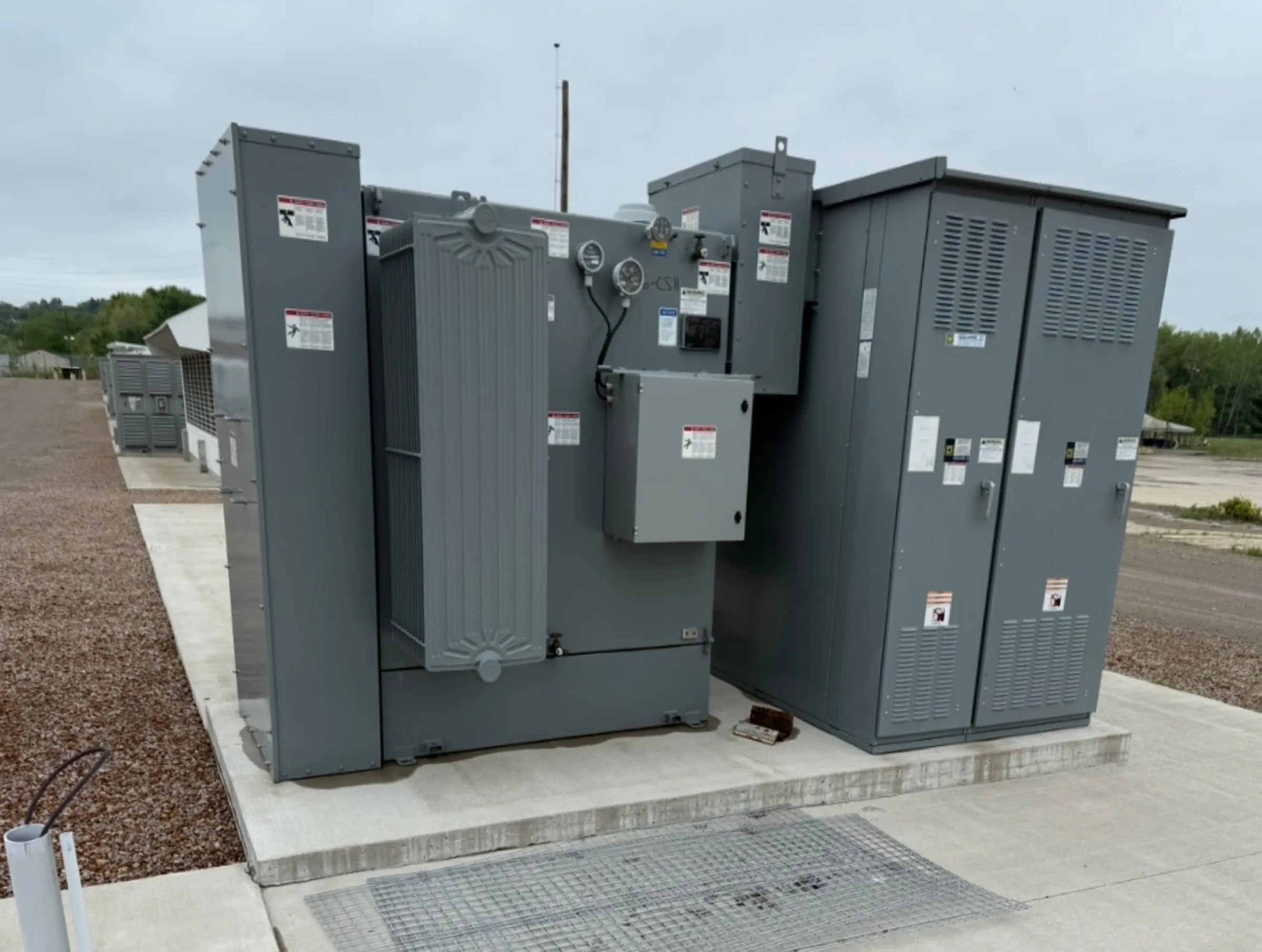
What we buy
What we buy here
The 161 kV system in Ohio is often grounded wye, which decides whether the unit has a neutral brought out. At 161 kV, the difference between a delta and a wye connection changes what the unit can feed.
| Meaning | 161,000 volts is a transmission level used by several utilities in the Ohio Valley and the Southeast. |
|---|---|
| Systems | transmission substations |
| Equipment | power transformers and GSUs |
| Buying note | One hundred sixty-one kV equipment is regional rather than universal, so the buyer pool is narrower than the size suggests. |

Who we buy from
Six kinds of seller, one desk
- Recyclers
- Electrical contractors
- Equipment dealers
- End users
- Demo contractors
- Distributors
Fast offers
A nameplate photo is usually enough to price a unit the same day.
Dedicated logistics
We arrange the crane, the permits and the flatbed, not you.
No broker fees
You are dealing with the buyer, so nothing is shaved off the offer.
How it works
Six steps from your yard to the money
- 01
Take pictures
The nameplate, the cabinet interior and the tank in daylight. Three photographs are usually enough to place a unit in the right class and the right price band.
- 02
Send them to us
The form on this page, a text or an email all reach the same desk. Include the city, the access and any deadline the site is working to.
- 03
Review the offer
A buyer reads the photographs, asks one or two questions and sends a written offer with the assumptions stated, so nothing changes on the day.
- 04
We schedule freight
Crane, flatbed and permits are booked around your access. You get a date and a window, and we carry the cost of getting it right.
- 05
Testing on arrival
Winding resistance, megger and turns ratio, plus oil analysis where the unit is liquid filled. The results decide the final number, and you see them.
- 06
Get paid
Payment is released on the agreed terms once the unit is received and tested, by check or ACH. No retention, no sixty-day terms.
What we handle for you
The parts sellers dread, done for you
Rigging
Crane and forklift arranged around your access, not the other way round.
Oil containment
Bunds, absorbent and disposal handled before the unit moves.
Bill of sale
A clean title document for your records, signed on collection.
PCB paperwork
Pre-1979 units get the testing and the manifest they need.
Voltage class
What 161 kV means on a nameplate
A 161 kV primary tells you the unit was built for a utility distribution system rather than for a plant bus. A partial assembly is bought on the assumption that something is missing, because it usually is.
Remanufacturing keeps the footprint, and the footprint is often the reason the unit cannot simply be replaced. A cabinet that has been opened recently has probably been looked at by somebody who knew why.
What we see at this voltage
Phase loss damage is often confined to one winding, which makes the unit a rebuild candidate rather than scrap. A locomotive transformer rarely travels far, which makes it a specialised purchase rather than a general one.
A gauge that reads ambient on a loaded transformer is a broken gauge, not a cold unit. A mechanical room built around a transformer will have to be opened, and the wall usually goes back afterwards.
Handling and safety
Hot work, confined space and crane lift plans are all part of the job, and a plant safety officer usually wants to see them first. A pad that has been used for storage for a decade will need clearing before a crane can set up.
A lift over a fence needs a crane with reach, and reach costs more than capacity. A step deck lowers the load and often removes the need for a permit, which is why padmounts travel that way.
What it is worth
A transformer sold as equipment keeps its documentation chain, and that chain has value to the next owner. A unit with a failed winding still has a tank, a core and a set of bushings, and those have a market.
A unit that has never been rewound carries a premium that is easy to explain and hard to argue with. A seller with photographs gets a firm number, and a seller with a description gets a range.
Common questions
Other voltage classes
Get started
Get an offer in minutes
Five fields and a phone number is all we need to start. We reply the same business day, and a firm number follows the nameplate photo.
(614) 715-3047or send the form and we will call you.
Questions
What sellers ask before they call
Equipment types
Do you buy 161 kV transformers in Ohio?
One desk, one state, one set of hauling relationships, which is why a Ohio pickup does not need a national carrier. If a unit sits just over a state line, the honest answer is that somebody closer should buy it. A unit with a clean surround has usually been maintained by somebody who cared, and that shows in the oil.
Service area
What is the difference between 161 kV and the next class up?
Some units we pass on, and we say why: a burnt core, a missing coil or a contaminated oil sample changes the answer. 161 kV equipment is common enough that bushings and parts can still be found, which helps a rebuild decision. A site visit answers in twenty minutes what a week of messages cannot.
Payment
Can a 161 kV unit be moved without a permit?
We do not buy in Pennsylvania, Michigan, Kentucky, Indiana or West Virginia, and we say so rather than waste a seller's week. A unit with the oil drained ships lighter and leaks less, but draining adds a day and a drum. A transformer with its original documentation is easier to insure, easier to resell and easier to explain.