No fees, no broker
Sell a K-Factor Transformer in Ohio
Dry-type units of this type bought across Ohio, in any condition, with the oil sampled before we quote.
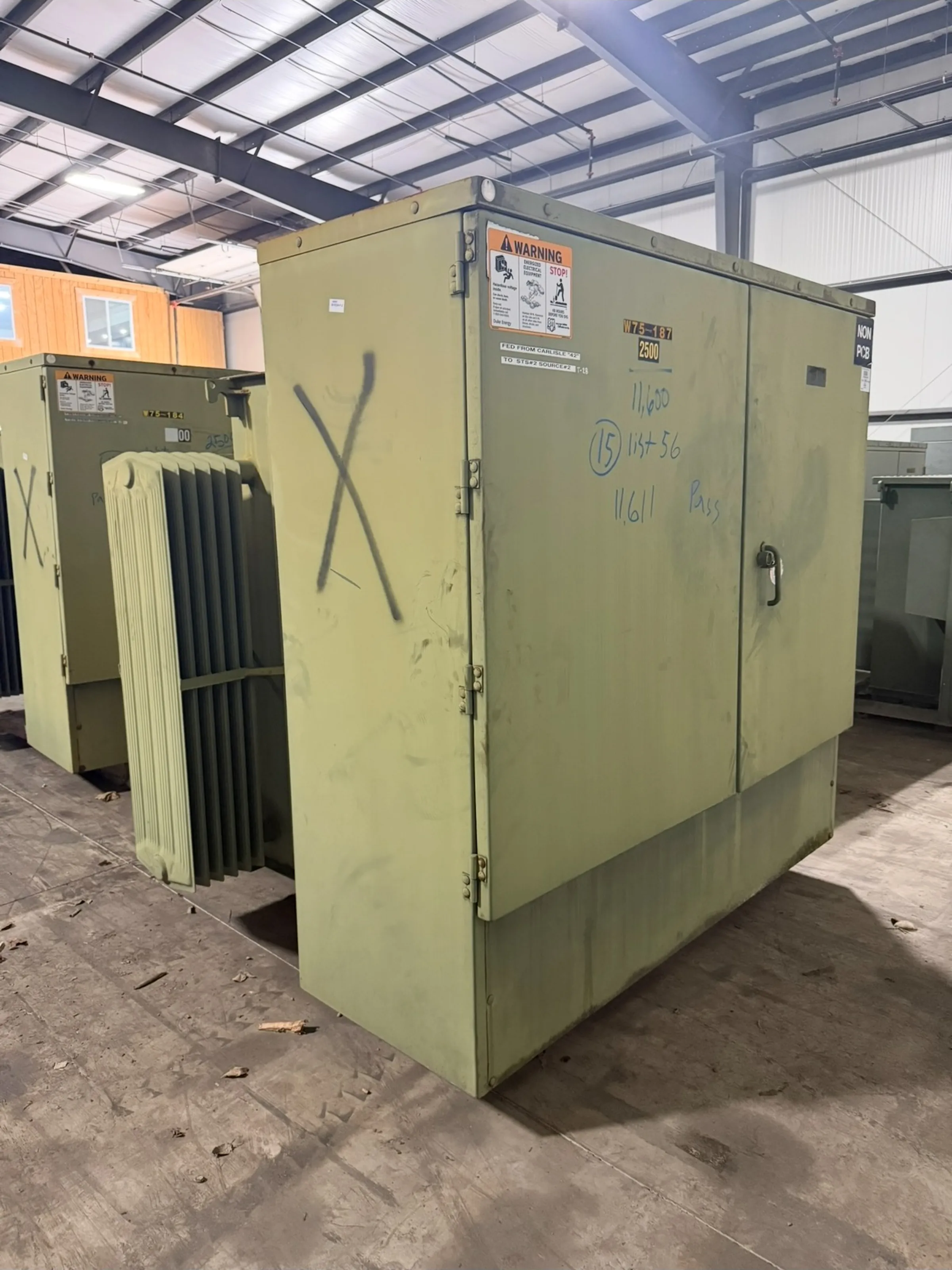
What we buy
What we buy here
The typical K-factor transformer in service has been doing one job for decades, and the job has usually changed around it. If the K-factor transformer is still connected to a live system, the utility disconnect comes first and the paperwork follows.
| Size band | 15 to 1,500 kVA |
|---|---|
| Voltage | 208 to 600 volts |
| Usually found | data halls, offices with dense electronics and any building full of switching supplies |
| What we inspect | the K rating on the tag, neutral sizing and winding temperature |
| How it travels | a pallet and a forklift for dry-types, a crane for the larger oil units |
Who we buy from
Six kinds of seller, one desk
- Recyclers
- Electrical contractors
- Equipment dealers
- End users
- Demo contractors
- Distributors
Fast offers
A nameplate photo is usually enough to price a unit the same day.
Dedicated logistics
We arrange the crane, the permits and the flatbed, not you.
No broker fees
You are dealing with the buyer, so nothing is shaved off the offer.
How it works
Six steps from your yard to the money
- 01
Take pictures
The nameplate, the cabinet interior and the tank in daylight. Three photographs are usually enough to place a unit in the right class and the right price band.
- 02
Send them to us
The form on this page, a text or an email all reach the same desk. Include the city, the access and any deadline the site is working to.
- 03
Review the offer
A buyer reads the photographs, asks one or two questions and sends a written offer with the assumptions stated, so nothing changes on the day.
- 04
We schedule freight
Crane, flatbed and permits are booked around your access. You get a date and a window, and we carry the cost of getting it right.
- 05
Testing on arrival
Winding resistance, megger and turns ratio, plus oil analysis where the unit is liquid filled. The results decide the final number, and you see them.
- 06
Get paid
Payment is released on the agreed terms once the unit is received and tested, by check or ACH. No retention, no sixty-day terms.
What we handle for you
The parts sellers dread, done for you
Rigging
Crane and forklift arranged around your access, not the other way round.
Oil containment
Bunds, absorbent and disposal handled before the unit moves.
Bill of sale
A clean title document for your records, signed on collection.
PCB paperwork
Pre-1979 units get the testing and the manifest they need.
Transformer type
What a k-factor transformer is
Most K-factor transformers are bought for a project that never happened, which is why so many of them are in good condition. A bushing with a cracked porcelain skirt fails a visual inspection before it fails electrically.
A padmount that has stood in the same spot for thirty years will have settled, and the cabinet will tell you how far. Pole units are the cheapest transformers in any surplus list and the easiest to move, which makes them a good first purchase.
Where these units turn up in Ohio
A rural site is often easier than an urban one, because there is room for a crane. A unit that has been in service is a known quantity, and a unit that has been idle is a question.
A mine-duty unit is designed to be dragged, and it looks it, which is not the same as being worn out. A unit that is documented is easier to move than one that is not, in every sense of the word.
What we check before we quote
Dents in a radiator bank matter more than dents in a door, because a crushed fin is a cooling problem that only shows up under load. A contaminated unit enters a regulated path, and the documentation changes from equipment to waste.
A clean test sheet travels with the unit and makes every later conversation shorter. A unit that has been run above its rating for years will show it in the oil rather than on the tag.
Condition, oil and contamination
What a K-factor transformer is worth to us
Getting it off the pad
Common questions
Other transformer types we buy
Get started
Get an offer in minutes
Five fields and a phone number is all we need to start. We reply the same business day, and a firm number follows the nameplate photo.
(614) 715-3047or send the form and we will call you.
Questions
What sellers ask before they call
Equipment types
Do you buy a K-factor transformer that has already failed?
Coverage means all eighty-eight counties, and the cities inside them are worked the same way as the farms between them. We turn down units that cannot be moved safely, and we say so before anybody spends money on a crane. A seller who mentions the deadline in the first sentence gets a schedule rather than a queue.
Service area
What does a K-factor transformer weigh, and does that change the pickup?
We buy in Ohio and only in Ohio, which is why a truck can be at a Ohio gate the same week the number is agreed. The truck is chosen from the weight, the height and the axle count, not from whatever happens to be in the yard. The second data plate on a rebuilt unit matters more than the first, and it is easy to photograph by mistake.
Payment
Can you collect a K-factor transformer outside Ohio?
Our interest is in the core, the copper and the paperwork that proves the unit is yours to move, not in a commission. We do not buy in Pennsylvania, Michigan, Kentucky, Indiana or West Virginia, and we say so rather than waste a seller's week. A site visit answers in twenty minutes what a week of messages cannot.